
I Got Sober, Built My Dream Life, Then Relapsed for 10 Years
Listen or watch on your favorite platforms
 YouTube
 Apple Podcasts
 Spotify
With Hannah.
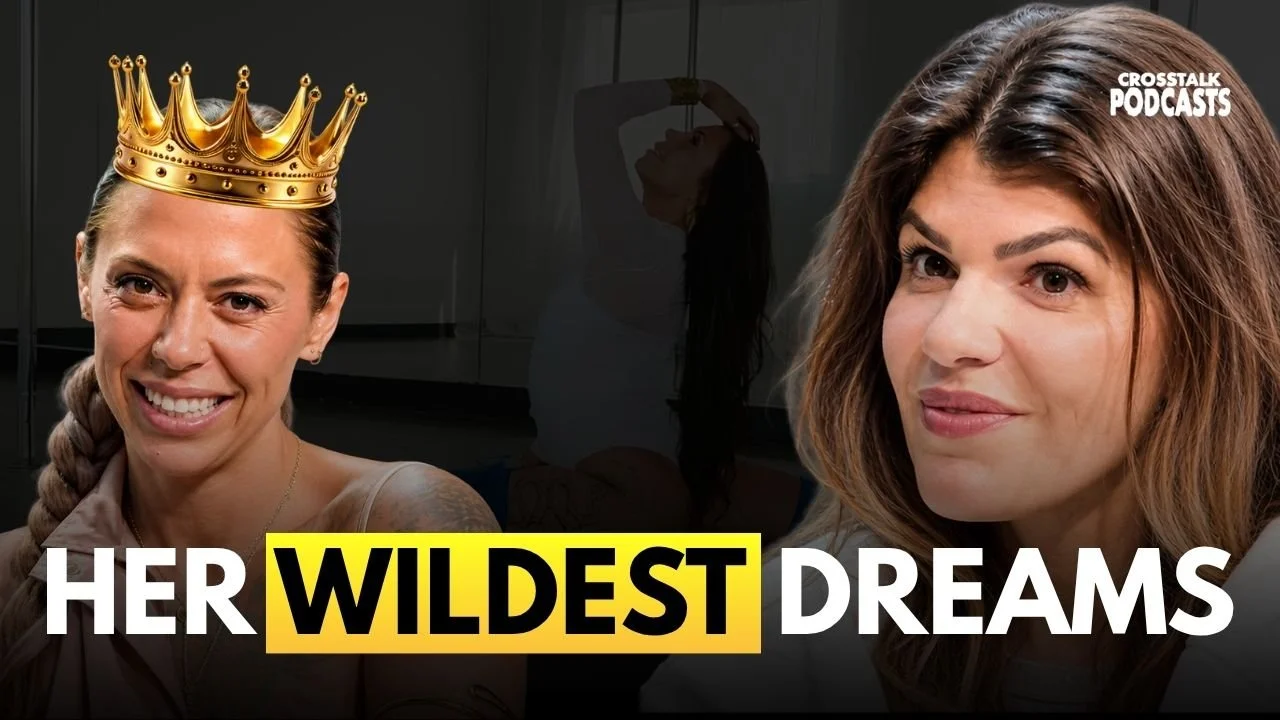
On this week’s episode of Crosstalk Podcasts, we speak with Hannah Marie Muse, a performer, artist, teacher, and recovery advocate whose journey through addiction began long before she understood what addiction was.
Growing up surrounded by family addiction, Hannah learned early to escape rather than talk about what was happening at home. She eventually ran away at 17, joined a circus in Chicago, and found a community where drugs, creativity, and belonging seemed to go hand in hand.
But what started as freedom eventually became another form of running away.
Hannah’s story isn’t simply about getting sober.
It’s about learning how to face yourself, build a life worth staying sober for, and understand that sometimes protecting your recovery means letting go of the people you love.
When Addiction Felt Like Belonging
Hannah grew up in Indiana with addiction already woven into her family. Her mother struggled with heroin addiction, but Hannah didn’t initially understand that her childhood was different from anyone else’s.
She started drinking at 15 and ran away from home at 17, looking for peace, art, and a life that felt like her own.
That search eventually led her to Chicago, where she joined a circus as a stilt walker.
She found artists, community, excitement, and belonging.
She also found drugs.
At first, using didn’t feel like a problem. It gave her confidence, helped her escape her home life, and made her feel connected to the people around her.
As Hannah puts it, addiction can sneak up on you because, at the beginning, it can feel beautiful.
The problem is that eventually, the escape becomes the life.
The Wake-Up Call That Wasn’t Enough
By her early twenties, the partying had become dangerous.
Blackouts were becoming common. She was using ketamine, ecstasy, LSD, and alcohol, often surrounded by people who were doing the same things.
Then, at 23, Hannah was arrested while partying with a DJ she was dating.
She found herself sitting in jail facing the possibility of 12 years in prison.
For the first time, she had to confront the reality of where her choices had taken her.
She prayed for days and promised herself she would change.
But getting out of jail didn’t immediately mean getting sober.
She continued partying for another year and a half.
The first wake-up call had scared her.
It just hadn’t changed her yet.
Choosing Rehab When She Didn’t Have To
Eventually, Hannah reached a point where the life she was living no longer felt like hers.
She remembers being in a mansion in Big Bear, surrounded by people and circumstances that once might have seemed glamorous, and realizing she didn’t even like the people around her.
She started looking for rehab.
Then something unexpected happened.
The criminal case against her was dropped.
Suddenly, she didn’t have to go to rehab anymore.
But she went anyway.
She had already made the decision to change.
Hannah completed 28 days of treatment and stayed sober for two years.
And this time, sobriety gave her something she hadn’t realized she was missing.
A life.
Sobriety Wasn’t About Becoming Boring
One of the biggest lessons Hannah took from her first period of sobriety was that the things she loved weren’t actually the problem.
Creativity wasn’t the problem.
Art wasn’t the problem.
Adventure wasn’t the problem.
The problem was believing she needed substances to access those parts of herself.
So she started giving herself permission to live.
She got her first passport.
She traveled to Bali and Thailand.
She studied yoga.
She built a massage business.
She returned to the same creative community where she had once used drugs, this time as a leader and artist.
She began creating poetry spaces, receiving grants, performing, and building communities around creativity and connection.
For the first time, she wasn’t using substances to make her life feel bigger.
Her actual life was getting bigger.
The Relapse That Became a 10-Year Chapter
Then came the relapse.
It started with something that seemed almost harmless: a cosmopolitan on a rooftop.
Hannah had started believing that alcohol represented adulthood, success, and celebration.
She had achieved many of the things she had dreamed about, but somewhere underneath that success was still the belief that she needed to fit into someone else’s version of what a successful life looked like.
One drink became another.
Then another.
And what she initially called a “blip” became a ten-year chapter.
During that period, Hannah continued to work, travel, perform, and maintain relationships while her drinking became increasingly destructive.
At her worst, she was drinking a fifth of whiskey a day and still functioning professionally.
Addiction didn’t necessarily look like everything falling apart overnight.
Sometimes it looked like continuing to function while slowly losing yourself.
Why Hannah’s Story Matters
Addiction doesn’t always look like chaos from the outside.
Sometimes it looks like success.
Sometimes it looks like creativity.
Sometimes it looks like a packed social calendar, a career, travel, and a person who seems completely in control.
Hannah’s story shows that recovery isn’t simply about removing substances.
It’s about learning why you needed them in the first place.
It’s about finding community.
It’s about telling someone what is really happening.
It’s about setting boundaries.
It’s about allowing yourself to be seen.
And ultimately, it’s about creating a life where you no longer need to run away from yourself.
FAQs
Who is Hannah Marie Muse?
Hannah Marie Muse is a performer, artist, teacher, and recovery advocate who shares her personal journey through addiction, relapse, sobriety, creativity, and service.
How long did Hannah’s relapse last?
After initially staying sober for about two years, Hannah returned to drinking and describes that period as a ten-year chapter before getting sober again three years before this interview.
What helped Hannah stay sober the second time?
Community and connection played a major role. She found support through AA and learned the importance of accountability, asking for help, setting boundaries, and surrounding herself with people who supported her recovery.
How did Hannah turn recovery into a meaningful life?
Hannah focused on building what she calls a “compelling future” through yoga, nature, poetry, performance, relationships, and service. She also created organizations designed to connect people in recovery with their communities.
What can someone supporting a loved one with addiction learn from Hannah’s story?
One of the biggest lessons is that you cannot recover for someone else. Hannah’s experience with her mother taught her that protecting your own sobriety may require difficult boundaries, even when you deeply love the person struggling.
Related episodes


ABOUT CROSSTALK

CROSSTALK reveals real stories of everyday people and notable figures, sharing their journeys from struggles to life-changing 'aha' moments with all kinds .

I Spent Years Running From Myself Until Recovery Taught Me to Be Seen