
Feeling vs. Fleeing: Reclaiming a Childhood Lost to Addiction | Jenna G.
Listen or watch on your favorite platforms
 YouTube
 Apple Podcasts
 Spotify
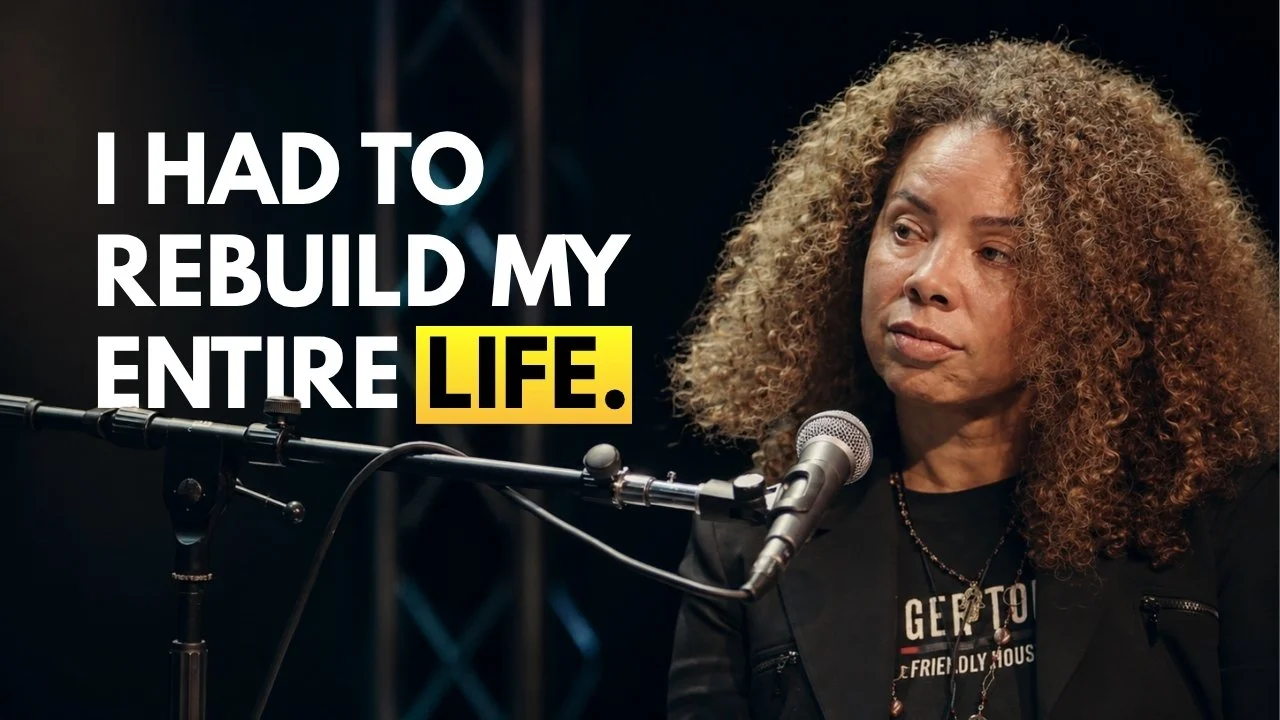
From the outside, her childhood might have looked functional. Inside, it felt anything but. By the age of six, she already knew something was wrong—her mother was an alcoholic, drifting in and out of recovery for most of her life. Home never felt predictable or emotionally safe. As a child, she learned to disappear internally, disconnecting from her body as a way to survive.
“So much of my childhood, I left my body,” she shared. “I can’t really identify a feeling there.”
That emotional absence followed her into adulthood. While others were learning how to name their feelings, she was learning how to reclaim them—slowly, painfully, and without a roadmap.
Growing Up inside the Chaos
Living between two parents meant living between two emotional realities. One household carried fear, unpredictability, and substance use. The other offered structure—but also tension, secrecy, and unspoken rules. She became hyper-aware, listening to fights from upstairs, learning when to intervene and when to stay invisible.
Even as a child, she discovered that control could create a sense of safety. If she could manage the environment—or the people in it—she could calm the chaos, at least temporarily. That belief would later shape how addiction showed up in her life.
The First Relationship with Control
Her addiction didn’t begin with substances. It began with food.
By high school, disordered eating had taken hold—not as vanity, but as regulation. “I can’t control this,” she said, “but I can control what goes in my body.”
Food became a language. Restricting gave her power. Binging numbed emotions she didn’t yet have words for. The cycle mirrored her upbringing—oscillating between extremes, searching for balance but never quite finding it.
That same need for control bled into relationships. She learned to manage people the way she managed food: over-functioning, fixing, rescuing, and losing herself in the process.
Active Addiction and Co-Dependence
As adulthood unfolded, addiction evolved. Disordered eating continued, but codependence quietly took center stage. She became deeply enmeshed in relationships where responsibility blurred and boundaries dissolved.
“I can show this person the rehab,” she said, “but I can’t make them walk through the door.”
Still, she tried. She gave grace where boundaries were needed. She mistook understanding for self-abandonment. The cost was exhaustion, resentment, and a growing sense that she didn’t matter unless she was needed.
The Bottom That Changed Everything
Rock bottom didn’t arrive as one dramatic moment. It came as a quiet realization: she was disappearing again—this time by choice.
After a painful divorce and years of emotional overextension, she saw the pattern clearly. Control wasn’t keeping her safe anymore. It was keeping her stuck.
For the first time, she stopped trying to fix others and asked a different question: What do I need?
That question changed everything.
Learning How to Get Helped
Getting help wasn’t linear. It wasn’t tied to one program or philosophy. She explored recovery spaces, including 12-step rooms, not because they had all the answers—but because they offered humility, humanity, and connection.
“I got a lot out of AA,” she shared. “Even if it wasn’t my program, the humility meant a lot to me.”
More importantly, she began practicing honesty—with herself and others. She learned that integrity mattered more than perfection, and that healing required boundaries as much as compassion.
Life Today
Today, her life is quieter—and fuller. She no longer disappears to keep the peace. She speaks up. She names her needs. She understands the difference between grace and self-betrayal.
“I have needs now,” she said. “And I speak up for them.”
Recovery, for her, isn’t about control anymore. It’s about presence. It’s about honesty over image, consistency over promises, and relationships built on kindness and truth.
Her story is proof that healing doesn’t require perfection—only willingness. And that a balanced, peaceful life is possible, even after years of chaos.
FAQs
What is disordered eating?
Disordered eating includes restrictive, bingeing, or control-based behaviors that disrupt physical and emotional health.How does codependence relate to addiction?
Codependence often involves over-functioning and losing boundaries in relationships affected by addiction.Can you recover without a 12-step program?
Yes—many people use multiple pathways to recovery, including therapy, coaching, and peer support.Why is control common in addiction?
Control often develops as a coping mechanism in unpredictable or unsafe environments.Is recovery possible after years of relapse patterns?
Absolutely—recovery is possible at any stage with honesty, support, and consistent action.
Related episodes


ABOUT CROSSTALK

CROSSTALK reveals real stories of everyday people and notable figures, sharing their journeys from struggles to life-changing 'aha' moments with all kinds .



I Spent Years Running From Myself Until Recovery Taught Me to Be Seen