
SECRECY to SOBRIETY: Breaking the Stigma of Addiction | April G.
Listen or watch on your favorite platforms
 YouTube
 Apple Podcasts
 Spotify
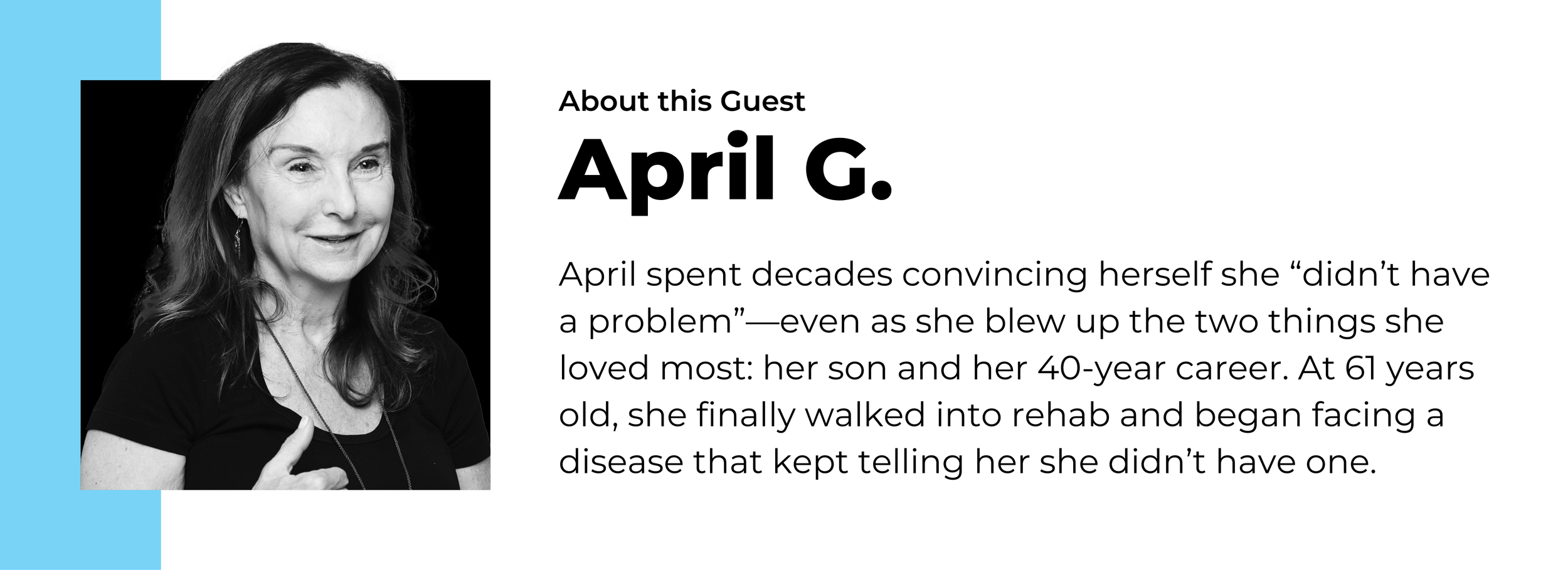
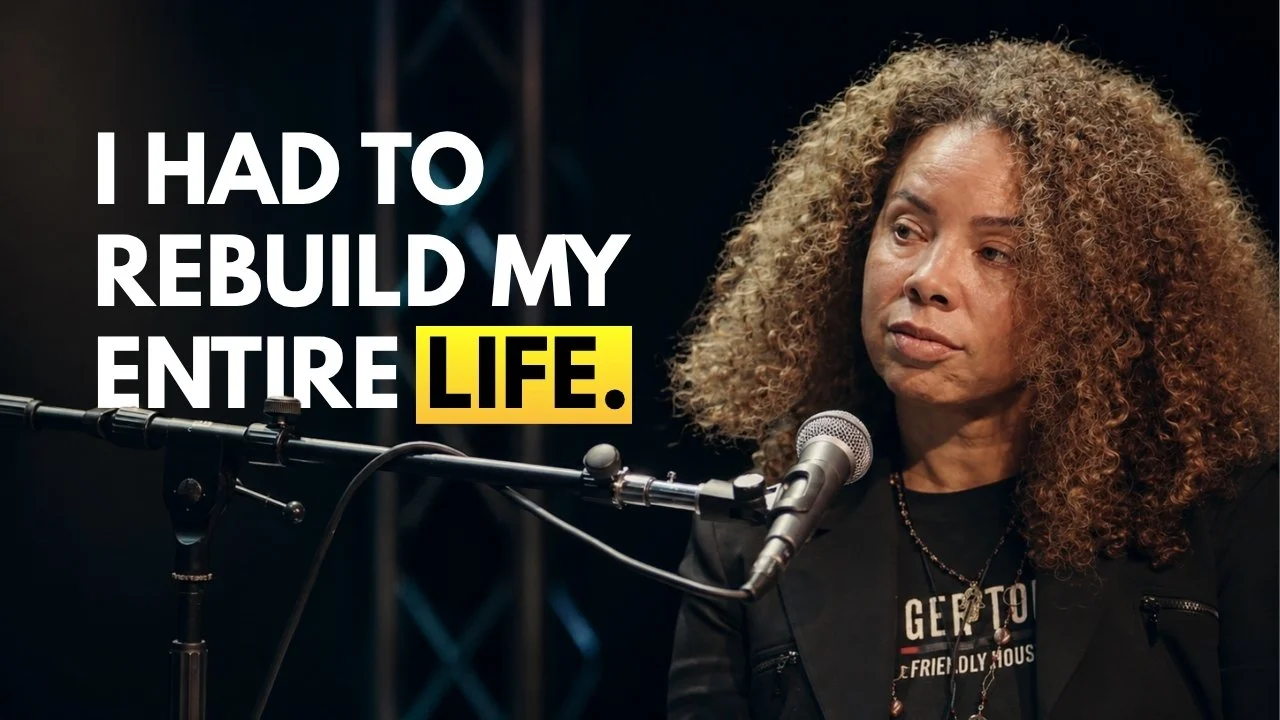
April spent decades convincing herself she “didn’t have a problem”—even as she blew up the two things she loved most: her son and her 40-year career. At 61 years old, she finally walked into rehab and began facing a disease that kept telling her she didn’t have one.
Growing Up
April learned early how to carry herself as the dependable one — polished, successful, and “put together.” On the outside, she was a high-powered New York career woman with decades of success behind her. On the inside, she remembers always feeling like “something was wrong with me,” a subtle ache she buried beneath busyness and performance. That feeling followed her into adulthood, where the expectations placed on women — to hold the house together, raise the kids, work full-time, and stay emotionally steady — became a quiet pressure cooker. She describes these years as “erratic at best, difficult at best,” a life lived at full speed without ever slowing down long enough to look inward.
The First Drink
Her first brush with getting help wasn’t an admission — it was curiosity. April would secretly search AA meetings online, slip into rooms late, and leave early so no one could speak to her. “It was like being there without being there,” she said. She wasn’t drunk when she went. She was searching. Testing. Trying to understand a growing whisper inside her: maybe something is wrong, and maybe I need help. But denial is powerful. “I have a disease that keeps telling me I don’t have a disease,” she admits — a truth she didn’t fully understand until much later.
Active Addiction
Her drinking escalated quietly, subtly. And like many high-functioning addicts, the outside looked fine — until it didn’t. She began rationalizing everything. She lied, minimized, and lashed out. The relationship with her son — the person she loved more than anything — began to fracture. “I blew up my relationship with my son… I caused him anxiety, fear, grief. And I blamed him for reacting,” she said. “He knew I was off within half a second” — just from her voice, tone, or mannerisms.
Alcohol took even more from her: a career she built over 40 years. In one drunken spiral, she texted clients, artists, and colleagues messages that detonated her professional life. “I blew up the two most important things to me — my son and my career,” she admitted. “This disease is strong, vile, determined… I still can’t reconcile how it took over everything”.
Hitting Bottom
Her bottom wasn’t one moment — it was a lifetime collapsing at once. The shame, the fear of being found out, the exhaustion of hiding. She remembers thinking, I can’t do this anymore. At 61 years old, she finally checked herself into Caron Treatment Center for 28 days — terrified, unsure, and completely cracked open. She entered the rooms of recovery with one belief: “I wasn’t ready to see myself. But I couldn’t go any longer selling myself short”.
Getting Help
Getting help became the turning point she never thought she’d reach. Rehab gave her clarity. AA gave her community. And a sponsor — a woman she searched meeting after meeting for — gave her hope. “She is a gift from above,” April said. “Every time we leave each other, she says, ‘You help me as much as I help you.’ And I believe her” . Through meetings, honesty, and connection, she began rebuilding everything she thought was permanently lost — her stability, her dignity, and eventually her relationship with her son.
What Life Looks Like Today
Today, at 70 years old, April is wide awake in her life. She watches the sunrise at 5:30 a.m., relishes the feeling of going to bed sober, and honors the woman she’s becoming. She describes sobriety not as the absence of drinking, but as learning how to live again: “I’m merging the old me and the new me. Some days it's hard. But every day I wake up knowing exactly when I fell asleep — and that’s a gift” .
Her life now is built on connection, accountability, and joy. She has two AA groups she loves, a support system she calls her “entourage,” and a growing sense of peace she once believed wasn’t meant for her. And if she could speak to her younger self, she’d say: “Get ready early. Don’t wait. A sober, healthy life is possible — and it’s worth it”.
April’s story reminds us that it is never too late. Whether 21 or 61, recovery doesn’t care how long it took — only that you finally came home to yourself.
FAQs
1. What are the first signs of high-functioning alcoholism?
Subtle behavioral changes — irritability, secrecy, minimizing drinking — often appear long before life visibly unravels.Can someone get sober later in life?
Yes — thousands find long-term recovery in their 50s, 60s, and beyond, and age has no impact on one’s ability to heal.What is “denial” in addiction?
Denial is the brain’s protective mechanism that convinces someone they’re “fine,” even as consequences mount.How does addiction impact family relationships?
Addiction often damages trust, communication, and emotional safety, but recovery can slowly rebuild those bonds.How does someone find a sponsor in AA?
Most people find a sponsor by attending meetings, listening for someone they connect with, and simply asking.
Related episodes


ABOUT CROSSTALK

CROSSTALK reveals real stories of everyday people and notable figures, sharing their journeys from struggles to life-changing 'aha' moments with all kinds .



I Spent Years Running From Myself Until Recovery Taught Me to Be Seen